Garage Door Manual Release: Which Way to Pull the Red Cord
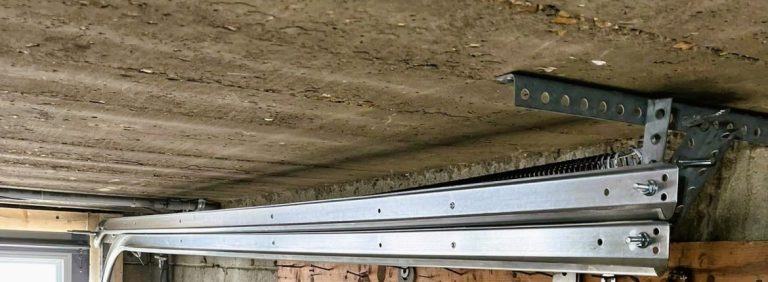
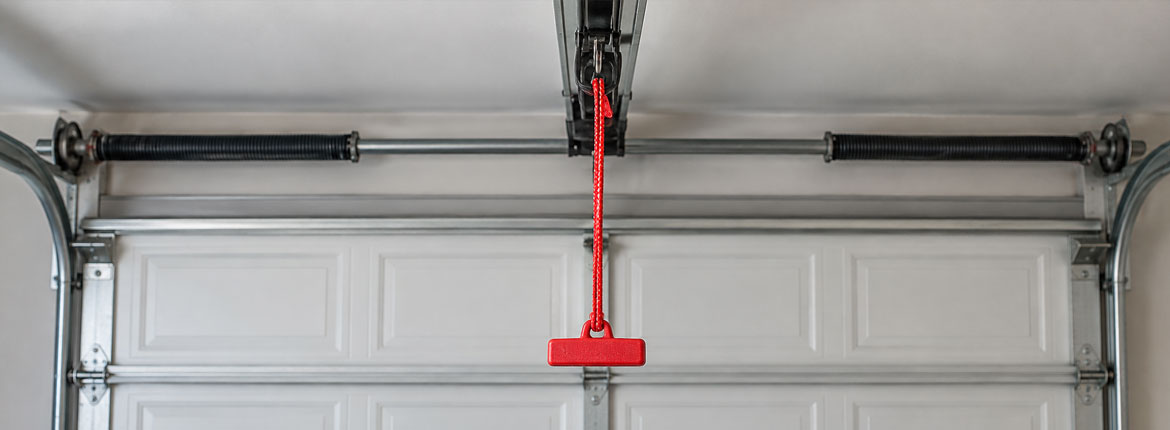
The manual release on a garage door is the red cord that hangs from the opener trolley, and pulling it frees the door from the opener, so the door can be raised by hand. Three checks decide whether to pull it at all. A table below shows which way the cord moves on each type of opener.
Do not pull the cord unless the door is down.
Power out right now?If the door is closed and flat on the floor, tug the red cord hanging from the opener rail straight down, then lift the door by hand. If the door is open, crooked or stuck partway, leave the cord alone and phone (636) 577-1430.
Never use the cord as a handle to raise or lower the door. Lift from the door itself.
A door that is too heavy to lift usually means a spring. A spring replacement costs about $175 to $275 on our garage door repair page, and the estimate is free.
Check Three Things Before You Pull
Chamberlain, which makes LiftMaster and Chamberlain openers, tells owners to use the release only when the door is fully closed. The federal safety standard for garage door openers says the same in the instructions every opener carries: a weak or broken spring can let the door fall fast.
- Is the door fully closed and flat on the floor? A closed door cannot fall, so nothing can drop when the opener lets go. A door that is partly open, or open all the way, is a reason to call. One Alabama dealer explains why the cord is risky then.
- Does anything look wrong? A crooked door, a cable hanging loose, a roller out of its track or a visible gap in a spring all mean the opener may be the only thing holding the door steady. After a car hit it, read the backed into garage door guide before you touch the cord.
- Is anything locking it? A slide bar or a keyed lock on the door will fight the lift and can bend the door. Undo it first, as Clopay advises, and unplug the opener so it cannot start while you work.
If all three are fine, the rest of this page is safe to follow. If one is not, stop at the phone call.
Which Way Do You Pull the Red Cord?
Reading the pages Google ranks for this question, we found two opposite directions for the same step. One Washington dealer says to pull the cord toward the door to re-engage. Chamberlain’s support page says toward the opener, for a square-rail unit.
Both are right, because the direction depends on the opener. Genie says the same: up toward the motor or up toward the door, depending on your model.
Scroll the table left or right to reveal every column.
| Opener type | To disconnect | To reconnect | If it will not catch |
|---|---|---|---|
| Square rail (a square tube on the ceiling) | Door closed. Pull the cord down from the trolley. The release arm snaps upright. | Pull the cord toward the opener, then run the opener through one full open and close. | Run one more full cycle. |
| T-rail (a T-shaped rail) | Door closed. Pull the cord straight down. To stay disconnected for repeated hand use, pull down, then back toward the opener. | Pull the cord straight down, then run the opener. | The door should catch on the next up or down trip. Run it again. |
| Wall mount (beside the door) | Door closed. Slide any door lock open first. Pull the handle down firmly until it clicks. | Pull the handle straight down until it clicks, then run the opener. | If the door moves hard or noisy by hand, stop and call a technician. |
| Genie ceiling unit | Pull the cord down. | Put the door back where it was when you released it. Pull the cord up, toward the motor or toward the door, as your model says. | Check the label or arrow on the handle for your model. |
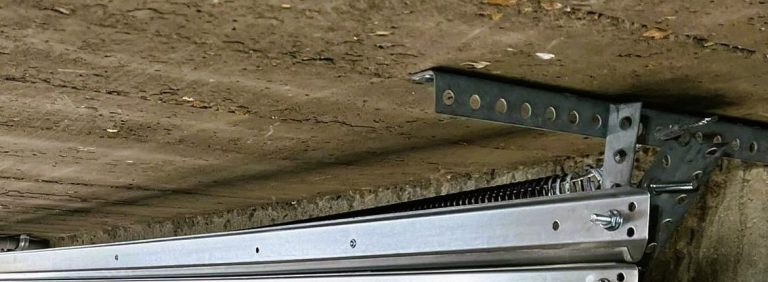
Chain-drive and belt-drive openers run on a ceiling rail, so the cord hangs from the trolley on that rail. On a wall-mount or jackshaft unit the cord hangs from the opener itself, as Clopay notes.
Some handles carry an arrow, as a Wisconsin dealer points out. Follow the arrow on yours over anything written here.
From the Pull to the Lift, Step by Step
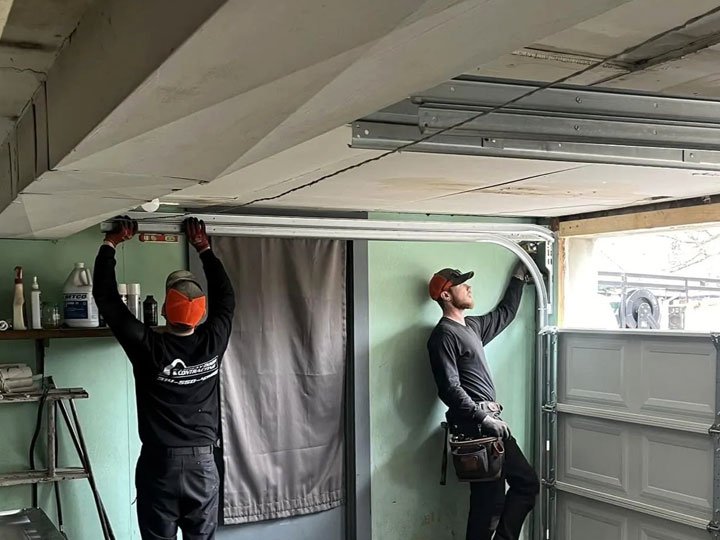
- Find the red handle. The federal standard requires it to be red, and tells installers to mount it at least 6 feet up and clear of vehicles so a car cannot trip it by accident. Plan on a sturdy step stool.
- Stand to the side and pull. Pull the cord as the table shows. You should hear a click as the trolley lets go of the carriage.
- Lift from the door. Use the handle on the door, or grip the bottom edge with both hands. Lift with your legs, and keep your fingers clear of the joints between sections.
- Check that the door stays up. A balanced door holds where you leave it. If it slides down on its own, lower it with both hands and leave it closed.
- Secure it if you leave it. With the opener off, the door is not locked. Slide the lock bar. Two dealers suggest clamping locking pliers on the track beside a roller.
The cord only lets go of the opener. Chamberlain warns in capital letters that it must never serve as a rope for lifting or lowering the door.
Getting the Opener Back on the Door
Close the door fully, and plug the opener back in. Set the cord the way the table says for your opener.
Press the wall button and let the door run all the way up, then all the way down. The trolley catches the carriage during that trip, and you hear a click.
If it does not catch, run one more full cycle before you try anything else. Still nothing? A trolley and carriage that no longer line up are in our garage door opener troubleshooting guide, which runs those checks in order.
Why Is the Cord Stuck, and Why Is the Door So Heavy?
A Colorado dealer explains the usual reason a cord will not pull: the door is loading the trolley. A door held partway up pinches the latch, so the cord feels stuck.
Close the door first. Once it rests on the floor, the trolley carries no weight and the cord comes free with a straight pull.
A heavy door is a different problem. Springs do the lifting for a door that weighs 150 to 300 pounds, so a broken one turns an easy lift into a struggle.
The test I use is the one in our garage door will not open guide. Close the door, pull the cord, lift to waist height and let go.
A balanced door stays put. A door with a broken spring drags at your arms.
Chamberlain calls a heavy door a spring problem for a professional. A Mid-Atlantic distributor says a door that feels over about 150 pounds is a sign of a broken spring.
A national franchise guide adds a tip: run that lift test once, with the power off at the breaker, before you ever need the release.
Locks, Outside Access and Security
A door can have two locks that matter. One is a slide bar or keyed lock near the bottom, and the other is an outside release near the top.
- The side lock. Slide it open before you lift, and shut it again after you close the door. Lifting against a locked bar can bend the door.
- The keyed outside release. A small round lock near the top panel lets you disconnect the opener from outside. Chamberlain notes that it only frees the opener. You still lift the door yourself.
- No outside release? Then there is no safe way in from outside during an outage. Keep a house key to the entry door.
- The cord is a security point. The same Colorado dealer warns that a thief can snag a long release cord through the top gap of a door with a coat hanger. Do not lengthen the cord, and consider a shield if that worries you.
Shops sell keyed release kits as a part. Whether one fits your door depends on the door, so this page does not recommend one.
What to Do When the Door Is Heavy
Stop lifting and lower the door carefully with both hands. Leave it closed.
A heavy door that hangs crooked, or comes off its rail, is a different job from a worn spring. Read the garage door off track guide for that one, and the broken garage door spring guide if you heard a bang.
Spring work is not a job to do yourself, and a technician is necessary for it. Our garage door spring repair page covers the repair, and the repair page lists it at about $175 to $275.
Technicians cover St. Charles County, from O’Fallon and St. Peters to Wentzville. Phone (636) 577-1430 and tell the office what the door did when you pulled the cord.
Where This Guide Stops
You cannot see my opener from here, and a model I have not seen may work differently from the table. Check your owner manual or the arrow on the handle, and treat this page as the general rule.
The maker also lists two fallbacks that remove a pin from the carriage or door arm. Those put your hands in the moving parts, so this page leaves them to a technician.
A door a car has hit is not for this page to handle. That case has its own rules, in the backed into garage door guide.
Common Questions About the Garage Door Manual Release
Getting a Technician Out
Ring (636) 577-1430 and describe the door, the opener type and whether the cord moved. That tells the technician what to bring.
The Better Business Bureau profile lists Gateway at an A+ rating, open to anyone. Customers describe their visits on the reviews page, and veterans own the company.
A door that is closed and locked can wait until morning. Prefer to write it down? Send the details through the free estimate form and the office calls to book a visit.