Garage Door Off Track: What Happened, What to Do Now, and What the Fix Costs
A garage door off track is a door whose rollers have left the steel rail on one or both sides, so it sits crooked, jams part way, or hangs on its cables. Nobody should move it, by the opener or by hand, until the reason it came off is found.
Right nowStop pressing the button. Pull the opener’s plug at the ceiling outlet. Keep kids, pets and the car clear of the door, and call (636) 577-1430.
Track repair and realignment is a same-day job on the garage door repair service page, and the on-site estimate is free. Most off-track repairs take a technician one to two hours. What decides the bill is why the door came off, and you can often read that from the doorway.
What “Off Track” Means on a Sectional Door
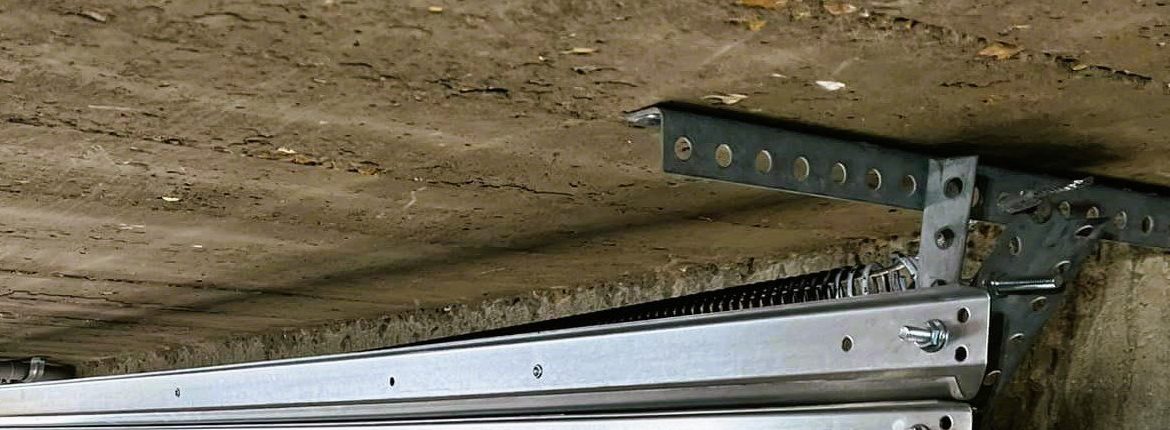
Your door runs on two galvanized steel tracks, one each side, usually 2 inches wide on a home door. Each track has three parts. A vertical section is bolted beside the opening, a curved section turns the corner at the top, and a horizontal section hangs from the ceiling on angle-iron brackets.
A roller sits at each hinge line and at each bottom corner, and the rollers ride inside those tracks. The springs and the lift cables carry the weight, which is 150 to 400 pounds on an insulated steel door. Rollers only keep the door on its path.
“Off track” covers four different failures, and they do not cost the same:
- One roller popped out. Usually a bottom one, it sits outside the vertical track and the door is wedged. Often nothing is bent.
- The door jumped at the curve. Both sides came out where the track bends, so the door hangs tilted under the horizontal rails. The track is usually spread or bent.
- One side dropped. One corner sits low and a cable hangs slack. The cable came off its drum or broke, and the rollers followed. Start with the guide to a cable that broke on one side, because the cable comes first.
- Something hit it. A bumper or a mower pushed the bottom section, the track bent, and the rollers left it. Expect a creased panel with this one.
Where Did It Come Off? What the Pattern Usually Means
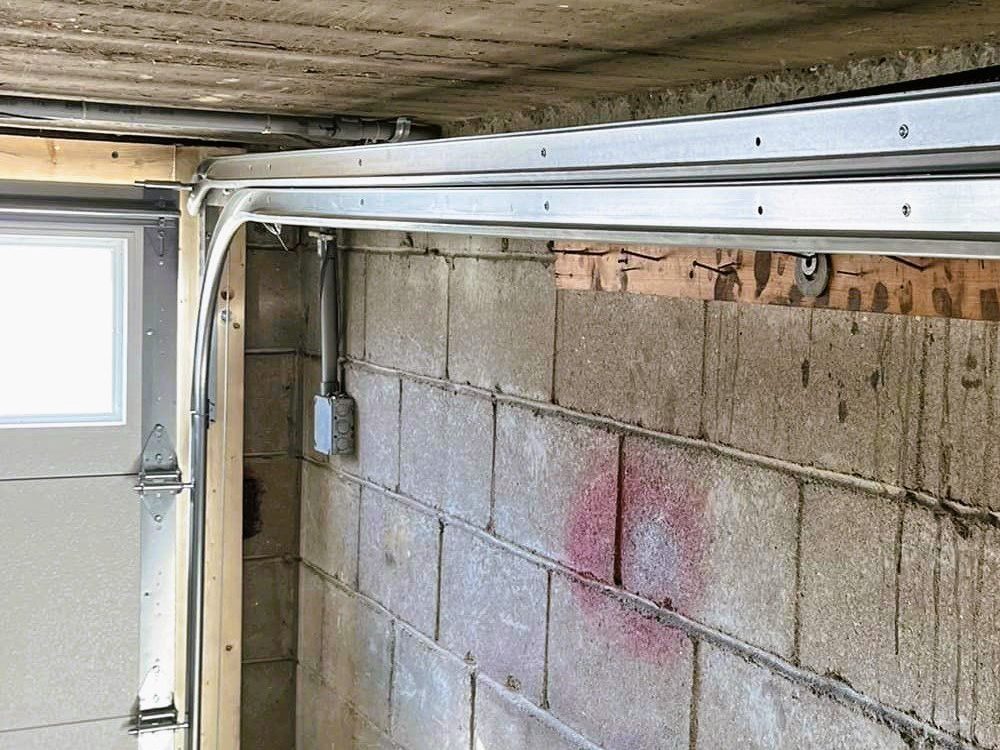
Look, do not touch. Stand in the doorway and match what you see to the table. Every row ends in the same phone call, but the row tells the technician what to load and tells you what the price will include.
| What you see | Usual cause | What the repair includes |
|---|---|---|
| One bottom roller outside the track, door wedged, nothing bent | The door closed onto something, or a worn roller slipped | A reset, a balance check, often new rollers |
| Both sides out at the curve, door tilted under the ceiling rails | Spread or bent track, or a loose hanger bracket | Track straightened or a section replaced, hangers refastened |
| One corner low, a cable slack or coiled on the floor | A lift cable off its drum or broken | Both cables, the drums and spring checked, then the reset |
| Rollers cracked, worn flat, or grinding for months before | Rollers at the end of their life, often old steel ones | A full set of nylon rollers plus the reset |
| A bent vertical track and a creased bottom panel | The door was hit | Track section, rollers, and a panel if it creased |
One homeowner on a forum thread Google ranks for this problem spent a day taking advice before someone spotted the real cause. The 2×4 his track hanger was screwed to had pulled loose, the rails had spread, and an exposed roller axle was the tell. His was a hanger job, not a roller job, and forcing the door back in would have bent the track for good.
What to Do Right Now, Based on Where It Stopped
How far the door got before it jammed decides what is safe. In every case the opener’s plug comes out first, because one press of a remote or a keypad sends the motor against a racked door. A chain-drive or belt-drive motor pushing a jammed door can strip its own drive gear, and then you are paying for an opener on top of the track.
| Where it stopped | What to do | Hands off |
|---|---|---|
| Down and wedged, car inside | Leave it. Pull the opener’s plug. Call and say the car is trapped. | Lifting it by hand, and the rollers |
| Part way up, crooked or tilted | Plug out. Nobody walks under it. Call. | The wall button, the remote, the door itself |
| Fully up, hanging under the rails | Leave it up, plug out, park on the driveway, and call. | The red release cord |
Two of the most-quoted pages online for this problem say to pull the red release cord first. With the door down that is harmless. Up and off its track, the door is partly held by the opener’s trolley, and the cord disconnects it.
Pulling the plug stops the motor just as well, and the trolley keeps its grip. That is the whole difference, and it is why the cord stays alone while the door is up.
Can you push a roller back in yourself? You cannot know from the floor whether the track that let it out is still straight, and a racked door loads its springs and cables unevenly. One that “just pops back” into a bent rail is on the floor again at the next close.
The one thing I would ask you to take from this page: a wedged door is a cheap repair, and a forced door is not.
Why Doors Come Off Track in St. Charles County
A straight, well-balanced track does not let go of its rollers on its own. Something put them out, and these are the usual reasons around here:
- It closed onto something. A trash can, a hose, a bike wheel. Its bottom section stops, the cable loses tension for an instant, and the roller jumps. A bottom seal iced to the concrete does the same on a January morning in O’Fallon or Wentzville, because the top panel moves before the bottom one does.
- Worn rollers. Older doors ran steel rollers that wear flat and seize. One that has been grinding for months is a single bump from leaving the track. Nylon rollers run quieter and last longer, which is why a reset usually comes with a new set.
- A broken cable or spring. One side loses its lift, the door racks, and the rollers on the low side bind and climb out.
- Loose or spread track. The horizontal rails hang on angle-iron brackets screwed to ceiling framing. A hanger that works loose lets the rails drift apart, and the rollers fall through the gap at the curve.
- A bump from a car. In a two-car garage in St. Peters or Cottleville, a bumper nudging the bottom section is enough to bend the thinner track on a newer door.
- Rust at the bottom. Winter road salt drips off the car onto the floor where the vertical track meets the slab, and summer humidity keeps it damp. Salt eats through the galvanizing, the track pits, and the bottom rollers no longer run clean. Missouri’s freeze-thaw cycle opens every pit a little wider each year.
One odd case from a workshop forum is worth knowing if you built your garage in stages. A door hung before the slab was poured ended up with vertical tracks that stopped short of the new floor, so the bottom rollers ran out of the rail on every close. Door companies measure after the floor is in for exactly that reason.
What the Repair Involves
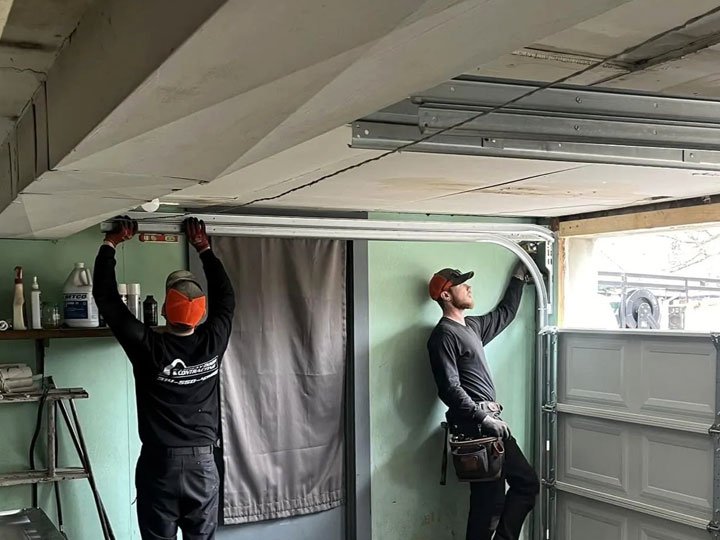
A technician works through it in this order, and the order is the reason it is not a homeowner’s job:
- Find the cause first. Rollers, cables, track and hangers are checked before anything moves. Reset without its cause fixed, the door is on the floor again next week.
- Secure the door. It is clamped so it cannot drop. If a cable or spring is involved, the spring tension is released with winding bars before anyone touches a bracket.
- Reseat or replace the rollers. Worn steel rollers go, and a set of nylon rollers goes in.
- Straighten or replace the track. A kinked section is replaced rather than hammered, and loose hangers are refastened to solid framing.
- Re-tension, balance, and test. Run by hand first and then by the opener, the door gets its auto-reverse tested before the technician leaves.
Nothing here teaches you to do that yourself. The most-quoted page online for this question hands you pliers and a rubber mallet, and the forum threads Google ranks are full of homeowners prying rollers back in and bending the track as they go.
When I quote an off-track door, I look for why it came off before it goes back on, because the reset is the $125 part and the cause is the rest of the bill. That is the only part a necessary repair has in common with a forced one.
What an Off-Track Repair Costs in St. Charles
The garage door repair page lists track repair and realignment as a same-day service, and the on-site estimate is free, so you get the price before any work starts. Nationally, G Brothers’ cost guide puts a plain reset with nothing damaged at $125 to $150. Once parts are involved it runs $150 to $450, with a set of rollers at $100 to $200 and a bent track section at $100 to $150 inside that.
Quality Overhead Door’s guide lands in the same place, $100 to $300 for most jobs, with an after-hours call adding $50 to $150. HomeGuide’s October 2025 price list has a full track replacement at $125 to $300. A cable that broke with it is listed on the repair page at $145 to $165.
The one that can tip over into replacement is the door that was hit, and the backed into garage door guide covers that case. A creased panel runs $300 to $900 per panel on HomeGuide’s list, and two creased panels plus a bent track start to approach the price of a new door. The garage door installation cost in St. Charles post has the local numbers, and the repair or replace guide walks through the call.
Where This Guide Stops
Only the garage door off track is covered here. It is not for one that still runs in its rail but sits crooked, and nothing above teaches the repair itself, so three cases live on other pages:
- One corner low, one cable slack, rollers still in the rail: that is a cable job first. Start with the guide to a cable broken on one side.
- A level door that refuses to move points at the power, the spring or the opener instead. Work through the garage door will not open checks before calling about the track.
- Any creased or cracked section becomes a garage door panel replacement question once the door is back on its track.
Common Questions About a Garage Door Off Its Track
Getting It Back on Track
Phone (636) 577-1430 and describe where the door jammed and what you can see. A technician comes out the same day where the schedule allows, finds the cause, and hands you the price before touching the door. The estimate costs nothing.
You can check on us before you let anyone near a loaded spring. Gateway is a veteran-owned, family-run company with an A+ rating on its Better Business Bureau page, and the reviews page holds customers’ accounts of their own repairs.
If the door is down, the car is out, and nothing is hanging, it can wait for the morning. Book a free estimate online and the office calls you back to set a time.