Why Does My Garage Door Open on Its Own? What Can Actually Do It
A garage door that opens on its own is a door obeying a signal, because nothing else can raise a door that was closed. There are 5 things that can send it. A stuck button, a remote programmed in that should not be, a shorted wall console, a damaged console wire, or a failing circuit board.
Start with the remotes. That test costs nothing and takes a minute.
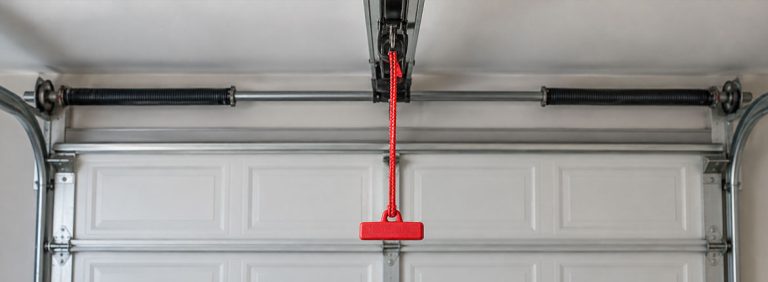
Tonight, before anything elsePull the opener’s plug at the ceiling outlet, or press the LOCK button on the wall console. You can still raise it by hand on the red release cord, and no signal reaches an unplugged opener.
Then phone (636) 577-1430 in the morning. An open garage at night is a security problem first and an opener problem second.
Phantom operation is daily work on the garage door opener repair page, the estimate is free, and the parts a fault like this needs are stocked. Our opener troubleshooting guide puts a repair across every fault at $65 to $385.
Did It Open, or Did It Never Finish Closing?
Answer that before you read any list of causes, because it cuts the list in half. The second case is the safety system refusing, not a phantom signal.
Shut last night and up this morning means the opener received a command. A door that started down, stopped and climbed back up never closed at all.
Swipe the table sideways to read every column.
| What happened | What it can be | What it cannot be |
|---|---|---|
| The door was closed. Later it was open. | A stuck button on a remote, keypad or console. An extra remote programmed in. A shorted console wire. A failing circuit board. A smart app or timer setting | The photo eyes, the travel limits, a worn roller or a tired spring. None of them can raise a closed door |
| It started down, then came back up | The photo eyes, something across the beam, ice or grit at the threshold, a travel limit set past the floor, a door binding in its last foot | A remote or a neighbor. A transmitter cannot make a door reverse mid-travel |
| It opens and closes in a cycle, over and over | A held-down signal from a stuck button, or a circuit board misreading itself | A one-time event. This one is a fault that will not stop on its own |
Reading the pages Google ranks highest for this question, we found the top one lists eleven reasons, and six of them are reversal causes. Its list includes a blocked door, a dirty track, stuck rollers, failed sensors, a spring problem and the limit settings.
Not one of those can lift a closed door off the floor.
Does your door reverse rather than open? Then the symptom belongs to the garage door will not close guide, and the rest of this page is not for you.
The Three Tests That Name the Culprit
Chamberlain, which builds LiftMaster and Chamberlain openers, publishes three tests for this exact fault, and its support pages still carried them in October 2026. They work in order, and each rules something out for good.
All three work on a chain-drive, a belt-drive or a wall-mount unit, since every one of them reads the same radio signal from the same board.
- Read the learn-button LED. Look at the small light beside the square learn button on the motor unit. A fast, steady flash means a transmitter is sending right now, with a button held in. You have your answer, and no tool was needed.
- Pull the batteries, one remote at a time. Take the battery out of a remote and watch that LED. When the flashing stops, the remote in your hand is the one with the stuck button. Check the outside keypad and the buttons built into cars, not just the visor clickers.
- Count the remotes, then erase them. If the LED is not flashing, the suspect is a transmitter programmed in that should not have been. On a Security+ 2.0 opener, the Smart Control Panel’s service menu or the myQ app shows how many remotes are programmed. More than you own is your proof. Hold the learn button about six seconds to erase every code, then pair only your own remotes and keypad back.
Those three steps cost nothing and settle most of these calls. Note what the door does for a day or two afterward, because the next step depends on whether it stops.
Still Happening After the Erase? Now It Is the Wiring or the Board
Once every code is erased and no remote is stuck, three things are left. The wall console, the thin wire running from it to the opener, or the board inside the opener.
A console wire is the most likely of the three. Picture thin two-strand wire stapled up a wall, and a staple through it, a mouse, or a leaning shovel can make the bare strands touch.
The opener reads that touch as a button press.
Chamberlain’s own method separates the three. The red and white console wires come off the motor unit, never the sensor wires, and you wait several days.
If the door still opens itself with the console out of the circuit, the board is at fault. If it stops, the console or its wire is.
That test costs a week of an unplugged opener and a confident hand at the terminal block. Here is where this guide hands over, because a technician reaches the same answer in one visit with a meter.
Can a Neighbor’s Remote Really Open Your Door?
On an opener made before 1993, yes, and it was common. Those units used a fixed code set by a row of tiny switches inside the remote. Two houses that set the same pattern shared a door.
Every opener sold since then uses a rolling code that changes with each press, so an accidental match is effectively impossible. The test is still free. Ask the neighbor to press their remote while you stand and watch your door.
An opener old enough for a fixed code is old enough to have no photo eyes either. Replacement is the conversation there, not repair, and new LiftMaster and Genie units on our garage door openers page start near $375.
One modern version of the same worry is real, though. A phone app with a scheduled close, a timer-to-close accessory, or a car’s button programmed twice will all move a door on their own, exactly as designed.
Check those settings before anyone blames the hardware.
Tonight: How to Secure the Door Before Anyone Comes Out
A door that opens itself is a security problem before it is a repair, and the fix for tonight is not the fix for the fault.
- Unplug the opener at the ceiling outlet. No power, no signal, no opening. Its own weight holds it down, with the springs carrying most of that load.
- Or press the LOCK button on the wall console. The padlock icon locks out every remote and keypad while the console still works, which is the softer version if you need the door tonight.
- Throw the manual lock bar if the door has one. Many older steel doors still carry a sliding bar or a T-handle that drops into the galvanized steel track. With the opener unplugged it is safe to use, and it is the only thing on this list that resists a pry bar.
- Get the remotes out of the cars parked outside. A visor remote in a car on the driveway is the one cause nobody wants to find later. A thief who finds one has your garage, and usually a door into your house.
Write down the time it happens, too. Openings that cluster at one hour point at a timer or an app.
Openings scattered through the day point at a stuck button or a wire. Openings that began the night of a storm point at the board.
Why It Happens in St. Charles Garages
- Storm season, and the board. A Missouri thunderstorm puts a surge down the same circuit the opener sits on. A board that takes a hit can sit normal for days, then fire the motor with nothing pressed. The giveaway is that it began the night of a storm, and a plug-in surge protector on that outlet is cheap insurance.
- The outdoor keypad. A keypad on an outside wall in O’Fallon or St. Peters takes rain in April and ice in January. Water in a button is a button that presses itself, so try two days with the keypad’s battery out before suspecting anything inside the garage.
- Winter ice at the threshold. This one is the false alarm. A ridge of ice under the door breaks the beam or stops the door short. The door comes back up, and the household finds it open in the morning. A reversal, not an opening, and clearing the ice ends it.
Garages here sit unheated through a 22-degree January low and August humidity. That freeze-thaw swing corrodes a terminal or stiffens an old console button until it stops springing back.
Where the Home Checks End, and What a Technician Does Next
Everything above is a battery, a button, a LOCK switch and a plug. Nothing here asks you inside a terminal block, under the opener’s cover, or near a live wire, and that is deliberate.
When to call: the door still moves after every code is erased, or it cycles over and over. Call too if it began the night of a storm, or you smell anything burnt near the motor unit.
A technician on one of these calls works it in this order:
- Read the opener’s memory. How many transmitters are programmed, and does that match what the household owns.
- Meter the console circuit. The console, the wire run and the terminals are tested one at a time, so the fault is named rather than guessed at. A staple through a wire shows up here in minutes.
- Isolate the board. With the console circuit out, a unit that still fires has a board fault, and that is the end of the diagnosis.
- Price it against the unit’s age. A board on a young opener is a repair. On one past 10 years it rarely is, since openers last 10 to 15 years and a board is a large share of a new unit’s price.
- Reprogram and retest. Remotes and keypad paired fresh, then the safety reversal tested with a 2×4 laid flat. Any visit that touches an opener ends with that test.
When I check an opener’s memory on a call like this and find an extra transmitter, it is almost never a neighbor. Usually a remote from a previous owner, a contractor, or a house sitter nobody thought to take back, and the six-second erase is the whole repair.
The console wire is where I spend the time on the harder ones. I am hunting one staple driven through a thin two-strand wire, somewhere up a wall, usually behind something heavy.
What Does It Cost to Fix in St. Charles?
The erase, the battery test and the LOCK button cost nothing at all, and they end a good share of these calls.
Beyond that, our opener troubleshooting guide’s price table puts an opener repair of any kind at $65 to $385. That range covers a new wall console, a fresh wire run, or a sensor pair at $85 to $100.
A circuit board is quoted on the visit against the price of a new opener. The garage door opener repair cost guide has a figure for each part.
How soon can someone come? The opener repair page offers same-day visits with a quote that costs nothing, and a named fault is usually settled on that one trip.
Transmitter memory and the safety reversal are both points on the 25-point garage door maintenance inspection.
Common Questions About a Garage Door That Opens by Itself
Getting the Door Back on Your Schedule
Call (636) 577-1430 and say what the door did, what time, and whether the learn-button light was flashing. Those three details tell the technician whether to bring a console, a wire run or a board.
New to us? The Better Business Bureau rates Gateway at an A+ rating. The owners are veterans running a family business, and the reviews page collects what customers say about the work.
With the opener unplugged the door is secure, so the repair can wait for business hours. Use the free estimate form, and someone from the office calls you back to book it.