Garage Door Spring Types: Torsion vs Extension Explained
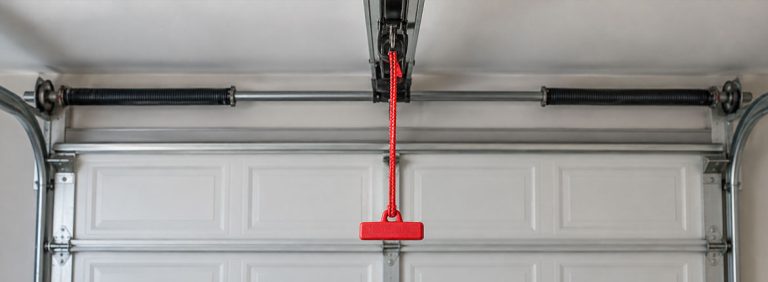
Garage door springs come in two types: torsion springs, which twist on a steel shaft above the door, and extension springs, which stretch along the tracks on each side. Each type comes in a few designs. Torsion springs include the standard spring, Clopay’s EZ-Set and Wayne Dalton’s TorqueMaster, and extension springs differ by how their ends hook on. You can tell which one you have from the floor.
If a spring has already broken, do not try to lift the door. Our spring repair service handles the replacement.
I quote and replace springs across St. Charles County. My advice is to identify the spring from the floor and leave the winding to someone trained to do it.
Garage Door Spring Types: Which One Do You Have?

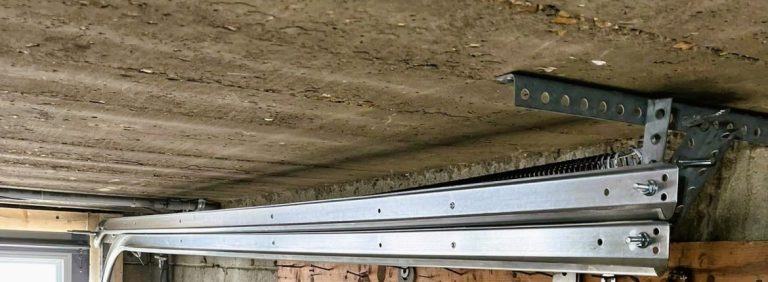
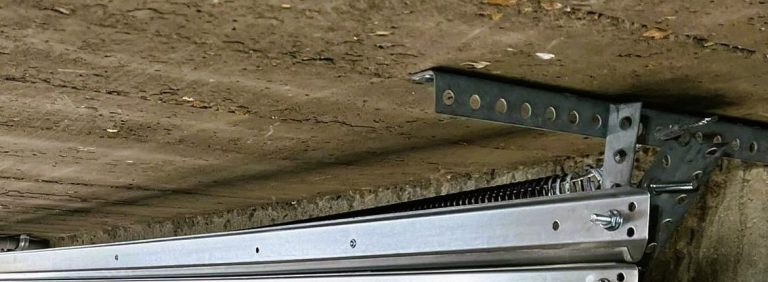
Look at the wall above the door, then along the tracks on each side. The two types differ in five ways you can see:
| Torsion | Extension | |
|---|---|---|
| Where it sits | On a steel shaft across the top of the opening | Along the horizontal tracks, one on each side |
| How it works | Twists as the door closes | Stretches as the door closes |
| Shaft | 1 inch on most home doors | No shaft |
| Safety cable | Not needed, the spring stays on the shaft | Needed through the middle of each spring |
| How it is marked | Numbers on a tag or stamp, and a colored cone | A painted color on the end |
A single door 8 or 9 feet wide usually carries one torsion spring, and a double door 16 feet wide usually carries two.
Torsion spring designs
- Standard. The basic design: a spring on the shaft with a steel cone at each end, wound at the center bracket.
- EZ-Set. Clopay’s design mounts the springs on winders at the ends of the shaft instead of at the center, according to garage door parts suppliers.
- TorqueMaster. Wayne Dalton’s design nests the springs inside the shaft itself, so you cannot see a break from the floor.
- Rolling door springs. Roll-up steel doors, the kind on storage units, use their own torsion spring design.
Extension spring designs
Extension springs differ by their ends: open-loop, double-loop and clipped. Precision Door calls clipped-end springs the sturdiest of the three. Every extension spring should have a safety cable threaded through its middle, so a spring that snaps stays on the cable instead of flying across the garage.
What the Numbers on a Torsion Spring Mean
A torsion spring is tagged or stamped with three measurements, and its cone color gives a fourth. A spring marked 250 x 2.00 x 32 reads like this, in order:
- Wire diameter. 250 means 0.250 inch wire. On standard springs with a 1-3/4 or 2 inch inside diameter, the largest wire used is 0.295 inch.
- Inside diameter. 2.00 means 2 inches. Most home springs are 1-3/4 or 2 inches, and Raynor uses 2-1/4 inches.
- Length. 32 means 32 inches.
- Wind. A red cone marks a right-wound spring, fitted left of the center bracket. A black cone marks a left-wound spring, fitted on the right. A pair has one of each.
Get any one of the four wrong and the door sits out of balance, which wears the opener and shortens the life of the new spring. Many torsion springs carry a second paint color too. That is the DASMA wire-size code: gold, for example, marks 0.177, 0.250, 0.331 or 0.462 inch wire.
DDM calls 10,000 cycles the industry minimum for a torsion spring, which is about 7 years at four openings a day. It also says stepping up in wire size can roughly quadruple spring life for about double the cost of the springs.
Do not measure a wound spring. It grows one coil for each turn of winding, about 8 coils on a 7 foot door and 9 on an 8 foot door, so its length on the shaft is not its true length.
Extension Spring Color Codes
Extension springs are not stamped. The painted color on the end is the door weight the pair lifts, and the colors repeat every 100 pounds, so tan can mean 100, 200 or 300 pounds. If the paint has worn off, the spring has to be matched by length and wire size instead.
| Color | Door weight | Color | Door weight |
|---|---|---|---|
| Tan | 100 lb | Red | 150 lb |
| White | 110 lb | Brown | 160 lb |
| Green | 120 lb | Orange | 170 lb |
| Yellow | 130 lb | Gold | 180 lb |
| Blue | 140 lb | Light blue | 190 lb |
Door Serv Pro, a Mid-Atlantic garage door company, puts a typical door at 130 to 350 pounds. Insulated doors sit at the heavy end because the foam core adds weight the spring has to carry. A 7 foot door normally uses 25 inch extension springs and an 8 foot door 27 inch springs, according to Angi.
Nationally a pair of springs costs $150 to $350 to replace, and our repair page lists the job at about $175 to $275. Our garage door repair cost guide compares that with other repairs.
Checking the Balance Before You Call
A balanced door is the sign the springs are doing their job. The Consumer Product Safety Commission describes one as a door that stays in place when you stop it partway open. To check yours:
- Close the door and pull the red release cord so the opener lets go.
- Lift the door by hand to about halfway.
- Let go. A balanced door stays put. If it drops, the springs have lost tension. If it rises, they are too strong for the door.
On extension springs, also look for gaps between the coils, a pair that no longer match in length, and orange dust under a coil, which means the coating has rusted through. Each of those means the spring is due for replacement.
What to Have Ready When You Call
Four things make the call quicker. Take a photograph of the spring with the stamp or color visible. Count how many springs the door has, which is one or two. Measure the door opening, height and width, from inside. And note the cone color if you can see it: red for a right-wound spring, black for a left-wound one.
Do not put a tape measure near a broken spring. Photograph it from a distance instead. A spring that has snapped is still under load at one end.
Why Springs Break in a St. Charles Winter
Almost every spring we replace in St. Charles County breaks on a cold morning, and that is not coincidence. Spring steel loses ductility as the temperature drops, so a spring already near the end of its 10,000 cycles gives out on the first hard freeze rather than in July. The average January low here is 22 degrees, and a winter that swings above and below freezing is harder on a spring than one that simply stays cold.
Summer does the slower damage. July and August humidity puts surface rust between the coils, and rust shortens a spring’s life. An unheated, unsealed garage is the worst case for it. If you see orange dust on the floor under the spring, the coating is already gone.
Where This Guide Stops
This guide helps you identify a spring and read its numbers. It is not a how-to for winding or replacing one, and it is not written for anyone who plans to. A wound torsion spring stores enough energy to break bones, and winding it takes proper bars and training. If you have not been trained on springs, do not loosen a set screw, a cone or a bracket.
Two more limits. On a two-spring door, replace both, because the second one has taken the same number of cycles. And the wrong spring, even one close in size, leaves the door out of balance, which our broken garage door spring guide covers in full.
Common Questions About Garage Door Springs
Replace Your Worn Garage Door Spring
A broken spring is not a job to take on yourself, whatever your tool collection looks like.
Check who you are hiring first. Gateway Door & Contracting has an A+ rating from the Better Business Bureau, and our reviews page shows what customers wrote about their spring jobs.
Request garage door spring repair as your first step.
If a spring has broken, call (636) 577-1430 with the photograph and the door measurements above, or book a free on-site estimate online.
Springs Are Not a DIY Job
Replacing the whole door?
Spring already broken?
We handle broken spring replacement for you. Please do not attempt it yourself.