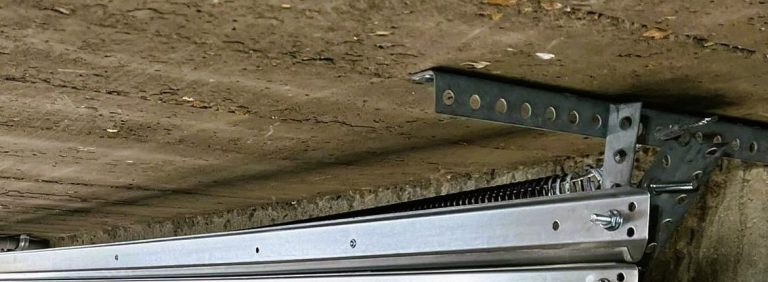
Broken Garage Door Spring: Should You Replace It Yourself?
No. A broken garage door spring is the one job on a garage door I would tell anyone to hand off, and not because the parts are hard to buy. A torsion spring on a 7-foot door is wound about 30 quarter turns by hand, and every one of those turns is stored energy held in your grip. Angi puts a professional spring replacement at $150 to $350, and $250 on average, and our repair page lists one at about $175 to $275.
We replace springs across St. Charles County. Below: the first ten minutes after one breaks, what goes wrong with the wrong spring, and what doing it yourself really costs. When you want it done, that is our garage door spring repair service.
The First Ten Minutes After a Spring Breaks
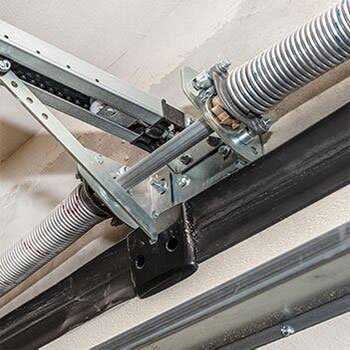
Most people find out with a bang from the garage, loud enough to sound like something fell. Then the door will not open, or the opener strains and lifts it a few inches before stopping. Do these in order.
- First, stop pressing the button. The opener is not built to lift the full weight of the door, and forcing it strips the gear or bends the top section.
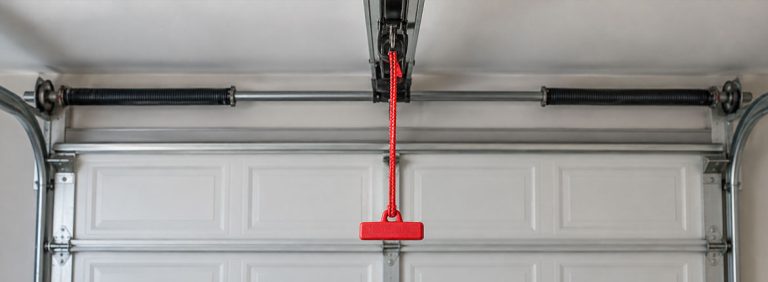
- Then look up at the shaft above the door. A gap of a couple of inches in one coil confirms it.
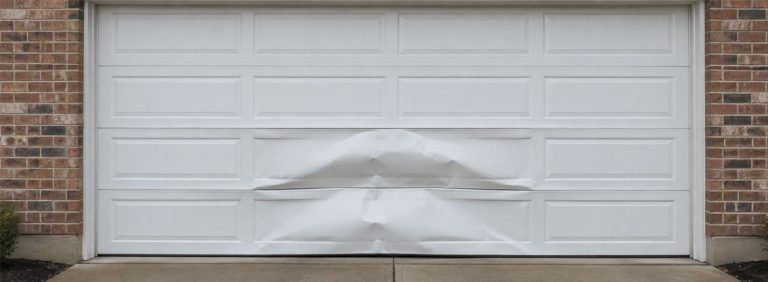
- Finally, leave the door where it is. If it is closed, it is safe. If it is stuck partway open, keep people and pets out from under it until someone who can take the load is there.
If you need the car out, there is a safe way to open a door with a broken spring, and it is in our guide for a door that will not open.
Why This Is the Job to Hand Off
A torsion spring does not lift the door. It stores the energy that lifts it. On a 7-foot door the spring is wound about 30 quarter turns, and on an 8-foot door about 36. Each turn is made by hand, with a steel winding bar pushed into a cone at the end of the spring, while the other hand takes the load and moves the next bar in.
The danger is a single slip. If a bar comes out of the cone while the spring is wound, the full stored force spins it free. That is how people get hurt doing this, and it is why Family Handyman’s step-by-step guide tells you never to use a screwdriver in place of a proper bar.
The federal opener rule says the same thing in its required warnings: weak or broken springs can let the door fall rapidly, and only a qualified service person should repair cables and spring assemblies.
Extension springs, the kind that stretch along the tracks on older and lighter doors, are not the safe alternative they look like. They are under load whenever the door is closed, and one that snaps without a safety cable through it flies across the garage.
What Happens With the Wrong Spring
People search this exact question: what happens if a 100-pound door gets a spring rated for 120 pounds? Spring suppliers size a pair to lift within 10 pounds of the door’s weight, so that spring is twice the tolerance. The door stops behaving like a door.
| Spring against the door | What the door does | What it costs you |
|---|---|---|
| Too strong | Rises on its own, will not stay closed, drifts up from halfway | The opener fights it on every close, and the door never seals |
| Too weak | Feels heavy by hand, drops when you let go | The opener carries the weight the spring should, and burns out early |
| Matched | Lifts with one hand and holds still at waist height | Nothing. This is the only right answer |
Springs are sized to the weight of the door, the height of the door and the drum they wind on, not bought by the look of the old one. A 4-section insulated steel door and a single-skin galvanized steel door of the same size need very different springs. A door that has been insulated, or had a heavier panel fitted since, needs a different spring from the one it was built with. Guessing is how the mismatch happens, and DDM says about a third of installed doors already run unmatched springs.
Can a Garage Door Work Without Springs?
Not safely. The springs carry nearly all of the door’s weight, and a 2 inch insulated 16 by 7 steel door weighs about 260 pounds. The opener is built to guide a balanced door, not to lift the whole thing. Run it on a door with no working spring and it will either stall or strip its drive gear, and if a cable goes on the way up the door comes down with nothing holding it.
The Honest Cost of Doing It Yourself
On paper the do-it-yourself route looks cheap. A pair of proper winding bars is about $25, and the springs themselves are a small part of a professional bill, which HomeAdvisor puts at $75 to $150 per torsion spring, fitted. This Old House puts a torsion spring set at $80 to $120 in parts and $350 to $540 installed.
What the gap actually buys is three things. The right spring, sized to what your door weighs now rather than what the old one was stamped with. Someone trained on springs who knows what a bar slipping feels like before it happens. And a balance test afterward, with the cables and bearings checked while the door is already open. HomeAdvisor puts the job at one to two hours of labor, at $75 to $150.
| Doing it yourself | Having it fitted | |
|---|---|---|
| Tools | Two 1/2 inch winding bars about 18 inches long, around $25, plus clamps and a ladder | Brought with the truck |
| Getting the size right | Measuring wire, inside diameter and length off the old spring | Sized to the door as it weighs today |
| The winding | About 30 quarter turns by hand on a 7-foot door | Done by a trained technician |
| What it costs | Parts, plus the risk | $150 to $350 nationally for a pair |
What You Can Safely Do
Plenty, as long as none of it involves the spring. Keep the door closed, unplug the opener so nobody presses the button by habit, and move anything you need out of the way. The Consumer Product Safety Commission advises looking the door and opener over every 30 days, which is how a worn spring gets caught before it breaks. If you want to confirm which spring type you have before calling, our spring types guide shows the difference and how long each one lasts.
Where This Guide Stops
Deciding who fixes a broken spring is the whole job of this page. It does not fix one for you, and it is not for anyone set on winding a torsion spring themselves. If you are going ahead anyway, use hardened steel winding bars, never a screwdriver, and have a second person there.
The rest of the door is outside its scope as well. If the spring looks whole but the door still will not move, the cause is somewhere else, and the won’t-open guide works through it.
Common Questions About a Broken Garage Door Spring
Getting the Spring Replaced
A replacement spring should be sized to what the door weighs now, not copied from the old spring’s label, because doors change weight over the years. Insulation gets added, a panel gets swapped, and the spring that suited it in 2015 no longer does.
Replace both springs on a two-spring door. DDM says a pair usually breaks within six months of each other, and a single new spring beside a worn one leaves the door out of balance. Our deals page takes $25 off a spring replacement, and that deal includes a 5-year warranty on the springs and 1 year on the labor.
Worth checking before anyone climbs your ladder: the Better Business Bureau gives us an A+ on a profile anyone can open, and the reviews page is what customers said after the door was balanced again.
Phone (636) 577-1430, or if the door is closed and nothing is urgent, book a free estimate online. Our spring replacement service page says same-day service may be available, and if not, the visit comes as soon as it can.